
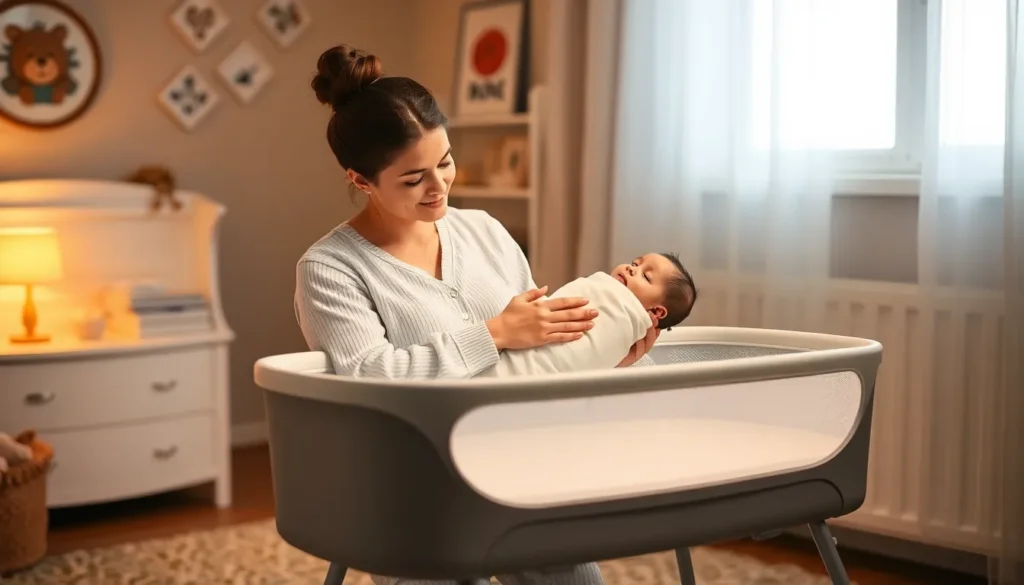
Getting a baby to sleep in a bassinet can feel like a high-stakes game of hide and seek. Just when you think you’ve found the secret to sweet slumber, your little one decides to audition for a role in a horror movie. But fear not! With a few clever tips, parents can transform those sleepless nights into peaceful moments.
Tips To Get Baby To Sleep In Bassinet
Understanding a baby’s sleep patterns is key to establishing a calming bedtime routine. Infants follow specific sleep rhythms that differ from those of adults.
Sleep Needs by Age
Newborns need 14 to 17 hours of sleep daily. During the first few weeks, sleep occurs in short bursts. By 1 to 4 months, they often sleep 12 to 16 hours, typically in multiple naps. Between 4 to 12 months, sleep requirements decrease slightly to 12 to 14 hours. At this stage, nighttime sleep becomes more consolidated, with longer stretches of rest.
Recognizing Sleep Cues
Parents should look for sleep cues to aid in getting infants to sleep. Common signals include yawning, rubbing eyes, and becoming fussy. Babies often become less responsive or lose interest in their environment before falling asleep. Catching these cues helps parents facilitate a smoother transition to sleep, promoting comfort in the bassinet. Recognizing these signs enables parents to create a consistent and soothing bedtime routine.
Creating a Comfortable Sleep Environment

Creating an inviting sleep environment can significantly impact a baby’s ability to settle down in a bassinet. Several factors contribute to this environment.
Choosing the Right Bassinet
Selecting a bassinet designed for safety and comfort is crucial. Look for models approved by safety standards for infants, ensuring they provide a secure space. The mattress should be firm and fit snugly without gaps to prevent risks. Some bassinets offer soothing features like vibrations or music, which can help lull babies to sleep. Styles that are portable allow for easy movement throughout the home, letting parents keep their babies close.
Optimal Room Temperature and Lighting
Maintaining an ideal room temperature is important for sleep. Aim for a range of 68 to 72 degrees Fahrenheit, as this supports better sleep for infants. Creating a dimly lit environment promotes a sense of calm. Utilizing blackout curtains can block out excessive light during nap times. Soft lighting, such as a nightlight, helps navigate during nighttime feedings without disrupting the baby’s sleep. A comfortable room, with the right temperature and lighting, encourages restful sleep for infants.
Establishing a Sleep Routine
Establishing a sleep routine significantly enhances a baby’s ability to sleep in a bassinet. Consistency fosters predictable sleep patterns, which in turn make settling into sleep easier for infants.
Importance of Consistency
Consistency plays a vital role in helping babies adapt to sleep routines. Maintaining the same bedtime nightly creates familiarity, helping infants feel secure and relaxed. Setting the same wake-up time each day reinforces this routine further. Bedtime rituals should remain similar each night, which aids in signaling that it’s time for sleep. Repetition of these patterns cultivates an environment where babies learn to distinguish between day and night. Consistent routines ultimately lead to more restful sleep for both baby and parents.
Pre-Sleep Activities
Pre-sleep activities enhance the transition to sleep for babies. Engaging in quiet, calming activities is essential. Reading a short bedtime story invites relaxation and fosters attachment. Gentle rocking or soothing sounds can promote a sense of calm. Bathing prior to bed helps create a sleepy atmosphere, signaling the end of the day. Utilizing dim lighting during these activities supports a peaceful environment. Following these strategies encourages babies to associate these moments with sleep, making the transition smoother.
Techniques for Getting Baby to Sleep
Parents can use various techniques to help their babies settle into a bassinet more easily. Focusing on comfort and reassurance enhances sleep quality for infants.
Swaddling Methods
Swaddling effectively creates a secure feeling for a baby, mimicking the snugness of the womb. Parents can use a lightweight blanket or a specially designed swaddle wrap, ensuring it’s wrapped snugly around baby’s arms while leaving enough room for the legs. Once swaddled, placing the baby on their back in the bassinet ensures safety during sleep. Many babies respond well to this method, finding comfort in the warmth and restriction provided. Additionally, adjusting the swaddle as the baby grows maintains effectiveness, providing the perfect balance of security and freedom.
Gentle Soothing Techniques
Soothing techniques play a critical role in helping a baby relax before sleep. Parents can try gentle rocking or swinging, providing rhythmic motion that often calms infants. Soft lullabies or white noise machines create a background sound, masking other disruptions that could wake the baby. Touching or lightly patting the baby’s back reinforces feelings of safety and comfort. Establishing a consistent approach with these techniques helps babies recognize cues for bedtime, further supporting a peaceful transition into restful sleep.
Overcoming Common Challenges
Parents often face challenges in getting their babies to sleep in a bassinet. Recognizing these hurdles can lead to effective solutions.
Dealing with Fussy Sleepers
Fussy sleepers may resist the bassinet. Consistency becomes crucial in these cases. Try establishing a calming pre-sleep routine, such as a warm bath or gentle rocking. Creating a comforting sleep environment also aids in reducing fussiness. Darkening the room could foster a peaceful atmosphere. Employing white noise machines or soft lullabies can help soothe a restless baby. Swaddling securely may provide a sense of comfort, akin to the womb. A firm mattress supports safety while ensuring the baby feels snug.
Transitioning from Co-Sleeping
Transitioning from co-sleeping to a bassinet requires patience. Starting the process gradually helps ease the baby into this new sleep arrangement. Introduce the bassinet during naps for familiarization. Position the bassinet close to the parents’ bed for reassurance. Consistency in placing the baby in the bassinet every night reinforces the new routine. Gradually increasing the distance between the bassinet and parents can assist with the adjustment. Maintaining a calming environment during the transition encourages better sleep patterns. Adapting to this new setup might take time, but with persistence, babies can learn to feel secure in their bassinet.
Conclusion
Getting a baby to sleep in a bassinet can be a challenging yet rewarding journey. By understanding sleep patterns and establishing a consistent routine parents can create a calming environment that encourages restful sleep. Utilizing soothing techniques like swaddling and gentle rocking can further enhance this process.
As parents navigate the ups and downs of their baby’s sleep habits it’s essential to remain patient and persistent. With time and the right strategies in place babies can learn to settle comfortably in their bassinet, leading to improved sleep for everyone involved. Embracing these tips can turn sleepless nights into peaceful moments for both baby and parents.


