

Ever found yourself wide awake at 3 AM, staring at the ceiling like it’s about to reveal the meaning of life? You’re not alone. Millions toss and turn, battling the dreaded insomnia monster. But what if there’s a way to kick that monster to the curb and drift back into dreamland? Enter “get back to sleep meditation,” the secret weapon for restless souls everywhere.
Get Back To Sleep Meditation
Get back to sleep meditation offers techniques aimed at helping individuals return to a peaceful state of rest. This approach incorporates relaxation techniques that can reduce stress and promote calmness.
What Is Sleep Meditation?
Sleep meditation encompasses various practices designed to induce relaxation and encourage sleep. This method often involves focusing on breath, visualization, or guided imagery. By directing attention inward, practitioners can quiet the mind and release tension. Techniques may include progressive muscle relaxation or mindfulness exercises. Many individuals use sleep meditation as a natural remedy for insomnia.
Benefits of Sleep Meditation
Numerous benefits arise from incorporating sleep meditation into a nightly routine. Improved sleep quality ranks high among these advantages, as meditation fosters deeper restorative sleep. Reducing anxiety and stress also plays a significant role, leading to a calmer mindset before bedtime. Furthermore, sleep meditation can enhance emotional regulation and boost overall well-being. Regular practice may even support better cognitive functioning during the day.
Techniques for Get Back To Sleep Meditation

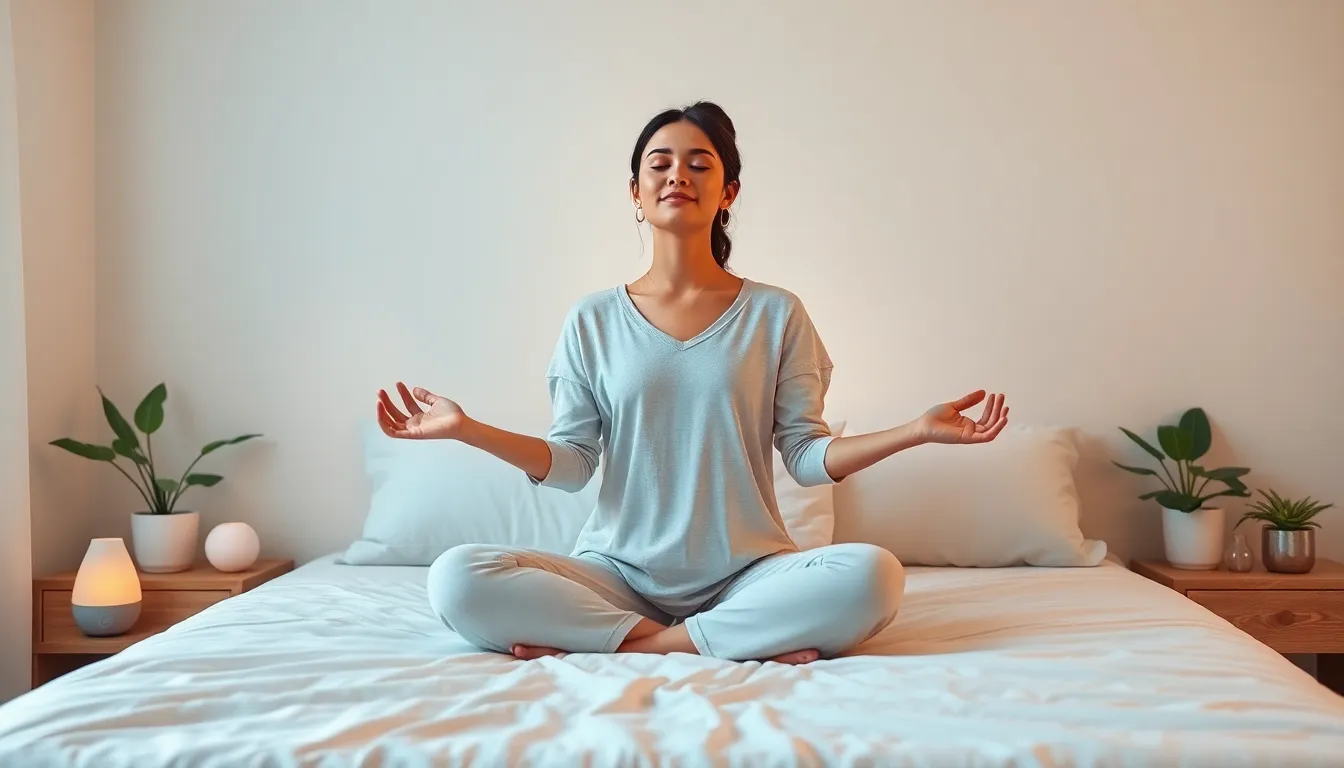
Various techniques exist to support get back to sleep meditation, enhancing the quality of rest. These methods focus on relaxation and mental clarity.
Guided Meditations
Guided meditations lead individuals through calming narratives, making it easier to refocus and unwind. Often, audio tracks or apps provide soothing voices that foster a sense of safety. Some sessions specifically target sleep by incorporating soft music or nature sounds. Listening to guided imagery promotes mental escape, helping the mind move away from daily stresses. Participants often visualize serene environments, creating a tranquil mental landscape conducive to sleep. The right guidance can transform restless nights into peaceful slumber.
Breathwork Techniques
Breathwork techniques prioritize intentional breathing patterns to calm the nervous system. Using deep diaphragmatic breathing, individuals can lower heart rates and promote relaxation. Counting breaths adds structure, allowing one to focus on inhaling for a specific count, then exhaling for an equal duration. Practicing 4-7-8 breathing becomes particularly beneficial; inhale for four counts, hold for seven, and exhale for eight. This technique encourages a serene state of mind, making it easier to drift back to sleep. Regular practice of breathwork enhances overall meditation effectiveness, resulting in improved sleep quality.
Creating a Sleep-Friendly Environment
A conducive sleep environment enhances relaxation and supports restful sleep. Focusing on elements that promote tranquility can significantly improve meditation and sleep quality.
Importance of a Calm Space
A tranquil space fosters better sleep. Noise levels should be kept low to avoid distractions. Comfortable bedding encourages the body to relax. Dim lighting contributes to a peaceful atmosphere. Personal touches, such as calming colors and nature-inspired decor, can enhance relaxation. Reducing clutter creates a more serene environment. Maintaining a consistent room temperature, typically between 60 to 67 degrees Fahrenheit, promotes comfort.
Tools and Resources for Sleep Meditation
Incorporating specific tools can deepen sleep meditation practice. Guided meditation apps provide structured sessions for relaxation. Soft music playlists can set a calming ambiance. Essential oil diffusers promote a soothing scent, like lavender, known for its sleep-enhancing properties. Comfortable eye masks block light, facilitating a restful environment. Weighted blankets offer gentle pressure, making users feel secure. Explore meditation cushions or reclined chairs to enhance comfort during practice.
Developing a Sleep Meditation Routine
Creating a consistent sleep meditation routine enhances the effectiveness of meditation practices. Regular engagement over time promotes deeper relaxation and more restorative sleep.
Timing and Consistency
Choose a specific time for meditation each night. Aligning the meditation practice with bedtime signals the body to prepare for sleep. Practicing for 10 to 20 minutes nightly encourages the development of a habit. Maintaining consistency fosters familiarity with meditative techniques. Individuals often find it beneficial to meditate shortly after getting back into bed when sleep eludes them. This approach effectively reduces stress and reorients focus towards tranquility.
Personalizing Your Practice
Customize meditation practices to meet personal needs and preferences. Experimenting with various techniques helps identify what resonates most. For some, guided meditations with soothing voices provide comfort and ease. Others may prefer breathwork methods, emphasizing natural rhythms of inhalation and exhalation. Incorporating personal elements, like favorite scents or calming music, enhances the meditation experience. Adjustments can lead to greater satisfaction and improved outcomes over time. Adaptation fosters a more meaningful connection between the individual and their practice.
Conclusion
Embracing get back to sleep meditation can transform restless nights into peaceful slumber. By incorporating relaxation techniques and creating a conducive sleep environment, individuals can significantly improve their sleep quality. Regular practice not only aids in drifting back to sleep but also enhances overall well-being. With various tools and resources available, personalizing meditation routines becomes easier and more effective. As individuals explore different methods and find what resonates with them, the journey towards restful nights and rejuvenated days becomes attainable. Prioritizing sleep through meditation is a powerful step towards achieving a balanced and healthy lifestyle.


