Shift work disrupts sleep in multiple ways, but the environmental factor that is both most underestimated and most controllable is light. The human circadian system is calibrated by light — morning sunlight suppresses melatonin and signals wakefulness; darkness allows melatonin to rise and signals sleep. For someone who needs to sleep between 8am and 4pm, their body receives the wrong environmental signal throughout the sleep period.
You cannot change sunrise. You can change what happens when light enters your bedroom.
Why ‘Blackout’ Fabric Alone Is Not Enough
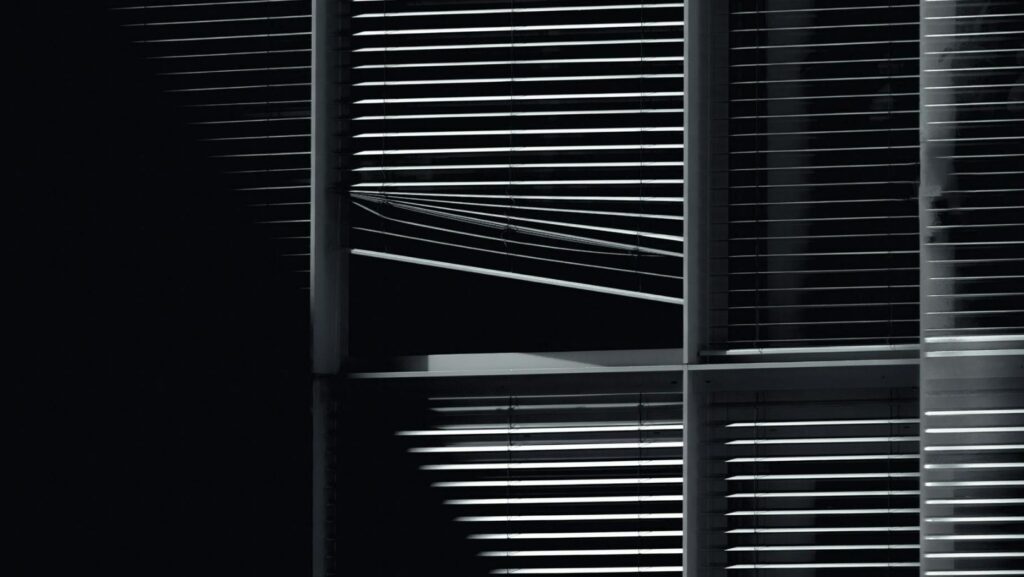
The fabric of a blackout blind genuinely blocks light transmission through the material — a well-made blackout fabric allows less than one percent of light through. The problem is not the fabric. It is the gap between the fabric and the window frame. A standard blackout roller blind hung on brackets will leave a gap of several millimetres on each side between the fabric edge and the frame. At 9am in July, when light levels outside are high, those gaps project bright stripes of light across the ceiling — enough to suppress melatonin and disrupt sleep architecture.
The Fitting Solution
For shift workers who sleep during daylight hours, the fitting method matters as much as the fabric specification. The most effective approach for uPVC or aluminium windows is a clip-in or perfect fit system that seals the blind against the frame on all four sides. There are no bracket gaps, no side bleed, and no path for light to travel around the fabric.

For timber-framed windows, the alternative is a face-fixed blind mounted well above and to the sides of the window frame — extending the fabric coverage beyond the frame on all sides — combined with side channel guides that the fabric travels within as the blind is raised and lowered. This eliminates the same gaps through different means.
Temperature and Noise
Light is the most powerful disruptor of daytime sleep for shift workers, but it is not the only one. Blackout blinds that also insulate — honeycomb cellular blinds in a blackout fabric — provide the additional benefit of reducing daytime temperature rise in a south or west-facing bedroom. A room that is dark and cool in summer is considerably easier to sleep in than one that is merely dark.
Blinds provide minimal acoustic insulation — for noise, heavy curtains over the blind, or a secondary acoustic treatment, are more effective. But the combination of genuine blackout performance and some thermal insulation covers the two environmental variables that are most within a shift worker’s control.
Practical Considerations
If you are ordering specifically for daytime sleep, specify blackout fabric rather than room-darkening or dimout. Room-darkening is a lower standard that reduces but does not eliminate light transmission. Ask the supplier to confirm whether the fabric is rated as true blackout before ordering.
Consider the fitting method as carefully as the fabric. The difference between a blind that darkens the room and one that actually blackouts it is almost always a fitting issue rather than a fabric one — and it is the difference between sleeping and not sleeping during daylight hours.